


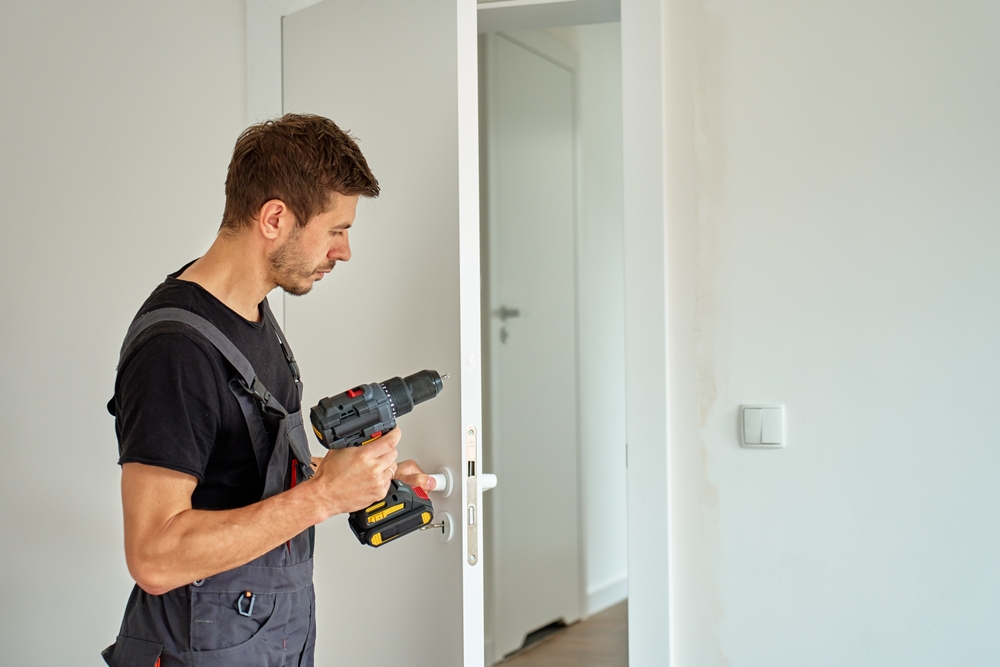
There’s a specific sound a misaligned door makes when it gives up trying to latch. A soft thud, then nothing, no satisfying click, just the panel drifting back open on the breeze from the bedroom AC. That’s usually the moment a homeowner goes searching for the best interior door repair carpenter near Palm Desert, CA, because shoulder pushing the door shut twenty times a week stops feeling cute around week three. The fix isn’t always obvious from across the room, since interior doors can fail for reasons that have nothing to do with the door itself. Foundation settling pulls jambs out of square, drywall screws back out of studs, hinge plates work loose, and humidity swings in spring and fall move wood frames by a quarter inch in either direction. Knowing what to look for and what to actually do about it saves the cost of a brand new slab when the existing one just needs a careful hand and the right tools.
1. The first thing carpenters check, and you should too
Before pulling out any tools, a good carpenter steps back and looks at the door in its frame from across the hall. They watch how the gap runs along the top and the strike side, since an even gap means the frame’s still square and the problem lives somewhere small, while a tapered gap that pinches at the top or bottom means the jamb itself has moved. Most homeowners skip this five second look and dive straight into adjusting the strike plate, which usually makes the problem worse by another sixteenth. Spend a minute reading the gap before touching anything. The door tells you most of what it needs.
2. Why hinges quietly cause most of the trouble
Hinges hold all the answers in roughly seventy percent of interior door problems, and the top hinge specifically carries the heaviest load and the most common point of failure. Pull on the door near the handle and watch the top hinge. If it lifts visibly off the jamb when the door is open, the screws have stripped out of soft pine or hollow drywall. The fix runs simple, swap one of the three short screws for a three inch screw that reaches into the actual stud behind the jamb. This pulls the hinge back tight and lifts the door corner enough to clear the strike plate in most cases. Total time, around five minutes per hinge with a charged drill.
3. When the strike plate is genuinely the problem
Sometimes the door swings true and the hinges are tight, but the latch still misses by a small margin. A quick check, close the door slowly and watch where the latch hits relative to the strike plate hole, since the contact mark tells you which direction to move. A latch hitting above the hole means the door has dropped. Fix the hinges first. A latch hitting below means the door has lifted, very rare in this climate. Most commonly, a latch hits one side of the hole, which you fix by removing the strike plate, drilling out the mortise a sixteenth of an inch in the needed direction, and resetting the plate with longer screws.
4. The fix everyone searches for, broken down step by step
The full path to a proper repair solution for an interior door not closing comes down to a logical sequence that works almost every time, in this exact order. First, tighten or extend the top hinge screws into the stud, since that single move resolves more than half of all complaints on the very first try. Second, check that the door slab itself hasn’t swelled from a recent humidity spike, planing the strike edge by a millimeter solves the issue if it has. Third, adjust the strike plate position by a sixteenth in whichever direction the contact mark indicates, mortising fresh material only if the new position needs it. Fourth, replace the latch mechanism itself if it’s worn smooth or sticky from age, a $12 part that swaps in under ten minutes. Skip any step, and the fix usually fails within a season.
5. Bundling the small jobs that come along with it
A carpenter on-site for a door fix is usually the right time to knock out other small items that have been piling up around the house. Loose cabinet pulls, sticky drawer slides, that closet bifold that’s been jumping its track since Thanksgiving, all of it gets handled inside the same trip charge. The same logic applies to glass items, with mirror repair in Cathedral City, CA, often showing up on the same ticket when the homeowner remembers the cracked vanity mirror from last winter while the toolbox is already open. Bundling trims real money off the cumulative bill, since trip charges and minimum visit fees stack up fast across separate calls. Most homeowners save 15 to 25 percent total by handling four or five small items in one efficient visit rather than calling separately for each one.
Conclusion
Interior doors don’t have to be a chronic frustration, and most problems take less than an hour to fix when approached in the right sequence. The trick is to read the door’s behavior before reaching for the screwdriver and to tackle the likeliest cause first, rather than jumping straight to the strike plate adjustment. A few well placed screws and one careful eye save the cost of a new slab in most cases. And once the door swings clean and latches with a quiet click, the whole house feels a little more settled. That’s the real return on a carpenter’s hour.
“Doors that won’t latch, hinges that sag, frames knocked off square, we fix them all. Phone Clear Winner at 760-338-0364, same week appointments open now.”
FAQs
Q1: Why won’t my bedroom door latch properly during summer in Palm Desert, CA?
Summer heat causes both the door slab and the wood jamb to expand slightly, and just a sixteenth of an inch is enough to throw the latch out of alignment. A quick hinge adjustment usually solves it in less than ten minutes once the carpenter is on site.
Q2: How much does a typical interior door repair cost in the Coachella Valley?
Most service calls run $85 to $185 for a single door fix, with bundled multi-door visits dropping the per door cost to around $60 each. Replacement of the strike plate, latch, or hinges adds $15 to $40 in parts, depending on the hardware finish you choose.
Q3: When should I repair the door versus replacing the whole slab?
Repair is the right call if the slab is solid wood, the frame is square, and the issue is hardware or alignment. Replacement makes more sense for hollow core doors with cracked or warped slabs, where the cost difference between fixing and swapping is minimal anyway.