


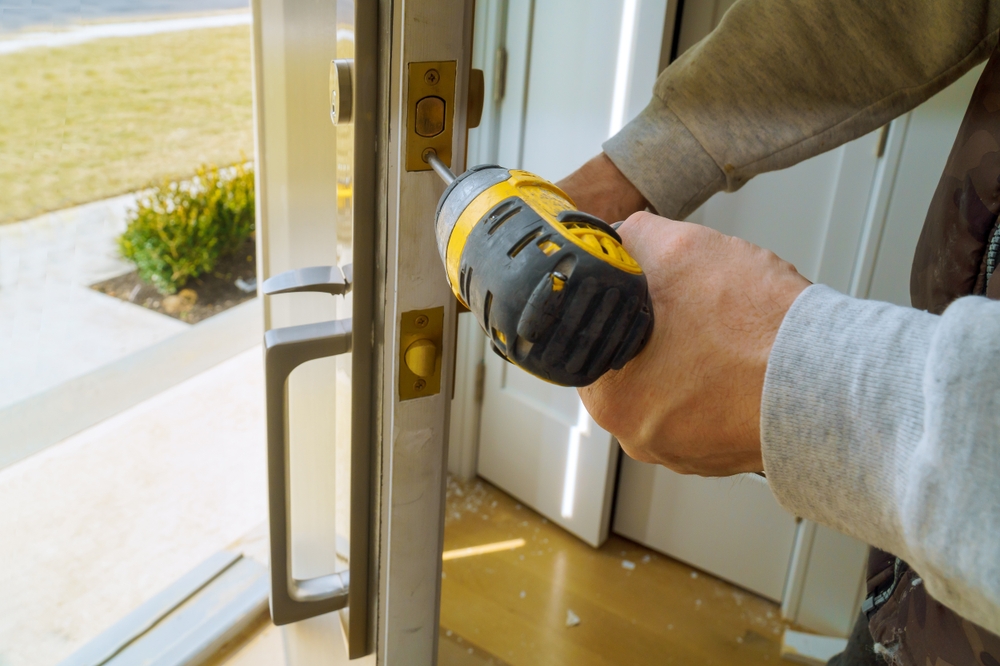
Front doors take more abuse than most homeowners realize. Forty-degree mornings in January, one hundred and seventeen degrees afternoons in July, dust storms that scour the finish, and direct UV that turns cheap paint to chalk inside two summers. That’s why entry door replacement in Palm Desert, CA, comes with a different set of material rules than the same project would in San Diego or Portland, where the weather actually leaves doors alone. The wrong material choice here means a door that warps, cracks, fades, or seizes in its frame within four or five years, while the right one looks sharp and works smoothly for decades. The showrooms make every option sound equally great, the salesperson’s commission structure leans toward the higher margin products, and homeowners walk in with no real framework to sort it all out. The breakdown below covers what each material actually does in this climate, with the tradeoffs spelled out honestly.
1. Why wood doors quietly disappoint here
Wood feels like the obvious traditional choice, and the showroom samples look gorgeous under the soft lighting. The reality of a west-facing entry in this valley is a different story entirely. Solid wood doors expand and contract through a quarter inch of seasonal movement, which means binding in spring and gaps in fall, with the latch alignment drifting all year long. UV bleaches stain finishes to gray inside three years, and the refinishing schedule averages every twenty-four to thirty months at $400 to $800 per visit. Termites and dry rot find any unsealed end grain within five years, and any wood door under $2,500 will simply not hold up through a decade of desert conditions without major intervention.
2. Fiberglass as the workhorse choice
Fiberglass has earned its reputation as the practical default for most desert installations. The composite skin shrugs off UV radiation, dimensional movement stays near zero across temperature swings, and the foam core delivers an R-value that beats wood by a significant margin. Surface options now mimic wood grain convincingly, with deep textured embossing that holds up under close inspection, so the visual compromise has largely disappeared. Pricing typically ranges from $900 to $2,200 for the slab alone, with quality units pushing toward $2,800 for premium finishes and decorative glass inserts. The warranty terms are usually the most generous in the industry, with a 20-year limited warranty standard from major manufacturers, and the maintenance schedule drops to a quick wash once or twice a year.
3. Steel doors and where they actually fit
Steel doors don’t quite fit the entry door conversation the way they once did, but they still hold a specific niche worth mentioning. The price point is attractively low, often $400 to $900 per slab, appealing to homeowners with tight budgets for rental properties or secondary entries. The downside, steel heats up dramatically in direct sun, becoming uncomfortable to touch by mid afternoon on west facing walls, and the surface telegraphs every dent and ding from the first delivery handling. Insulation performance lags behind fiberglass noticeably, and the paint finish requires touch up every three or four years to prevent rust bleeding through scratches. Where steel does win, security ratings for forced-entry resistance exceed those of every other material at this price point.
4. Comparing the real life numbers on each option
A clear breakdown of the best materials for entry door replacement comes down to roughly twenty year cost projections, since lifecycle math beats showroom price every time. Wood doors net out around $6,500 over twenty years when you factor in refinishing, hardware replacement, and the inevitable mid life replacement at year ten. Fiberglass lands closer to $2,800 across the same period, since one quality unit lasts the full twenty plus years with minimal upkeep. Steel hits roughly $4,200 total, factoring in two replacements and ongoing rust prevention work between them. Aluminum-clad composite doors run higher upfront at $2,500 to $3,800 but deliver thirty year performance for owners planning to age in place, with no real maintenance schedule beyond hardware tightening.
5. The hardware and glass choices that change everything
Material choice is only half the story, since hardware and glass options swing the final result significantly. Multi point locking systems add $200 to $450 to any door but transform both security and weather seal, since the door pulls tight against the weatherstripping at three points instead of just one. Decorative glass inserts run $150 to $700, depending on size and complexity, with low-E coated impact glass essential for any insert larger than half the door surface. Threshold material matters too, with bronze and stainless options outlasting the aluminum standards by a wide margin. Skip the cheapest hinges, no matter how attractive the bundle pricing looks, since hinge failure causes 60 percent of door problems regardless of slab quality, and good hinges cost $40 per pair instead of $12.
Conclusion
Material selection for a front door reaches well beyond curb appeal in this climate, into real territory of long term cost, comfort, and security. Fiberglass wins for most homeowners on the lifecycle math alone, with steel filling specific budget driven roles and wood reserved for owners willing to commit to ongoing refinishing visits. Hardware and glass choices deserve the same careful evaluation as the slab itself, since they shape how the door actually performs across the years. Spend the extra thirty minutes in the showroom walking through real specs rather than glossy brochures. The right material choice pays back every single day for the next twenty years.
“Smart material choices that last decades, not seasons. Phone Clear Winner at 760-338-0364, we’ll walk through options, pricing, and timing in one straight visit.”
FAQs
Q1: What’s the best entry door material for the climate in Palm Desert, CA?
Fiberglass wins in this market for most homeowners, with its zero dimensional movement, UV resistance, and twenty year warranty coverage. The slab cost runs higher than steel but lower than wood, and the long term cost picture beats every other option by a noticeable margin.
Q2: How much does a typical front door project cost in the Coachella Valley?
Most full-entry door projects in this area run between $2,200 and $5,500 installed, depending on slab material, decorative glass choices, and any needed framing repairs. Fiberglass installations typically land in the $2,800 to $4,200 range with quality hardware included.
Q3: When should homeowners in the Coachella Valley schedule a front door replacement?
Late fall through early spring works best, since installers have shorter lead times and the cooler weather lets sealants and adhesives cure properly. Avoid scheduling the install during July and August, when the heat works against the materials’ chemistry.