

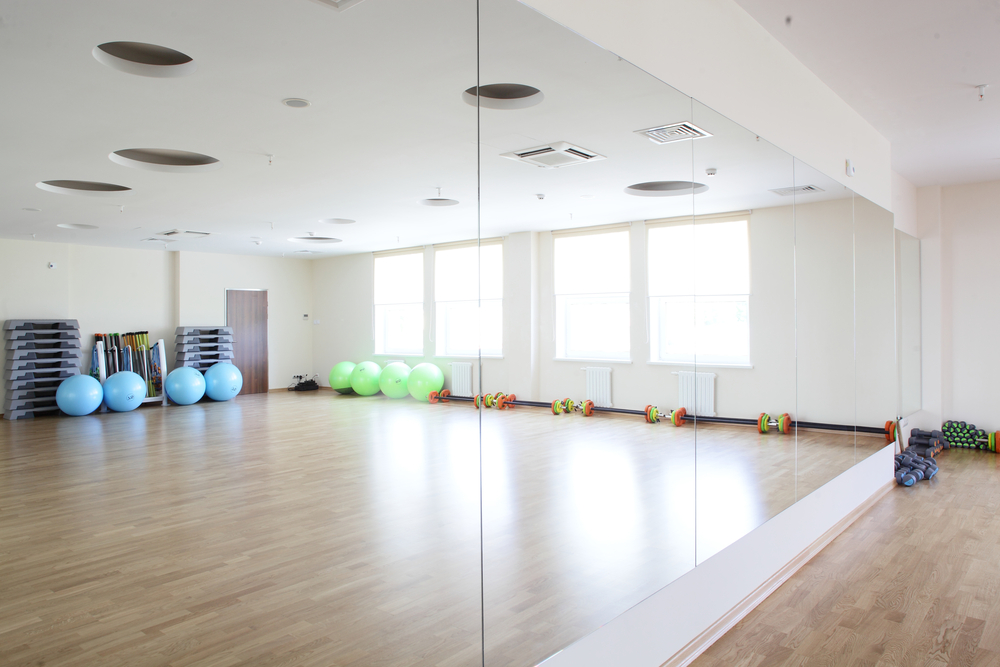
You’ve cleared out the garage, the rack is bolted to the slab, the flooring is finally down, and the only thing standing between you and a real home gym is a blank wall you keep checking your form against from memory. Putting up a proper run of custom gym wall mirrors in La Quinta, California, is a different job than leaning a few cheap closet mirrors against the drywall, because the size, the flatness, and the way you actually mount them all change once the space is built to train in. Most people grab a big-box mirror kit and a roll of tape. That is how you end up with a wavy, sagging wall by August. A training mirror has to read true. So here is how to lay one out the right way.
1. Start With Height, Not Just Width
Most people fixate on how wide the mirror should be and skip the part that matters more, where the bottom edge actually lands. Set it too low and every dropped kettlebell, splash of sweat, and scuffing shoe finds the glass, set it too high and you lose your feet at the bottom of a squat. The sweet spot usually puts the bottom edge around 20 to 24 inches off the floor, clearing the baseboard and the chaos zone while still showing your full stance. For most lifting, a panel 60 to 72 inches tall covers everyone from the bottom of a squat to the top of an overhead press. Map it out on the wall with painter’s tape, stand in front of it, and run through a squat and a press before a single piece of glass gets cut.
2. Sizing a Full Wall
Covering an entire wall changes the math, because once you push past roughly 60 inches in any direction, a single sheet of mirror gets heavy, flexible, and awkward to handle. A serious large home workout room mirror setup usually runs as a row of panels instead of one giant slab, both for safety and just to fit through a standard garage doorway. Thickness matters more than people expect, since quarter-inch glass stays flat and reads true while the thin big-box stock waves and warps your form like a carnival mirror. Measure the real wall and not the blueprint, because drywall bows and garage framing is rarely dead flat in the first place. Knowing exactly what your wall is doing before you order saves you from glass that ripples every time you check your bar path.
3. One Sheet or Several Panels
If you go with several pieces instead of one, the seams are exactly where a job looks pro or looks cheap. Done right, installing interlocking wall mirrors means butting the panels tight and dead level so the seam reads as a thin hairline, not a crooked gap you catch every single set. Start from a level reference line drawn high on the wall and shim each panel up to it, because a garage slab that slopes toward the drain will throw the whole run off if you measure up from the floor. Plan the seams to fall on or near studs, where the wall sits firmest and flattest. Map your outlets, light switches, and the garage door track before ordering, so a panel doesn’t end up landing halfway across a switch plate.
4. What It Actually Costs to Cut
The price swings on three things mainly: glass thickness, total square footage, and how many custom cuts the wall actually needs. Smart, affordable fitness mirror glass cuts start with handing the glass shop exact measurements up front, since a precise notch around an outlet done once costs less than fixing a bad guess later. A clean rectangular run is the cheapest layout there is, while every custom angle, radius, or cutout adds real labor to the bill. Quarter-inch glass runs higher than eighth-inch but lasts longer and reads dead true, so on a wall you stare at every single session it tends to be money well spent. Ask for vinyl safety backing while you are at it, because in a garage gym a struck mirror should hold together, not rain shards across your platform.
5. Why You Don’t Hang This Yourself
A six-foot mirror is heavier and far more dangerous to handle than it looks, and double-sided tape on its own will not hold it through a desert summer. Seasoned professional mirror glass hangers combine a full-spread mastic with a J-channel along the bottom edge, so the weight is carried from below, and the panel cannot peel off the wall when the garage hits 120 degrees in July. They shim the backing for flatness, which is what keeps your reflection true instead of subtly bowed. They also know which adhesives actually survive desert heat, not the hardware-store glue that lets a panel sag and bubble by late August. Tape-and-pray installs are exactly how people end up with cracked glass on the floor and a fresh gouge torn down the drywall.
A good gym mirror wall disappears; you stop noticing the glass and start noticing your form, which was the whole point of putting it up. Get the height right, measure the real wall, plan the seams and the cutouts, and mount it for the heat, and you end up with a wall that reads true for years instead of a wavy, sagging afterthought. The gap between those two outcomes is almost entirely in the planning and the install, not the glass itself. That kind of measured, flatness-obsessed glasswork is what Clear Winner brings to every job, a Coachella Valley crew that cuts mirrors to fit the wall you actually have and mounts them to hold in real garage heat. When you’re ready to turn that blank wall into a training mirror, they’ll cut it and hang it right the first time.
“Blank gym wall? Skip the tape and the wavy big-box mirror. Call Clear Winner at 760-823-8770 for custom-cut, distortion-free mirrors mounted to last.”
FAQs
Q1: How high should I mount gym mirrors in La Quinta, California?
In La Quinta, California, a bottom edge around 20 to 24 inches off the floor works for most home gyms, clearing the baseboard and the splash-and-scuff zone while still showing your full stance. A panel 60 to 72 inches tall covers everything from a deep squat to an overhead press.
Q2: What thickness of mirror is best for a home gym in La Quinta, California?
For home gyms in La Quinta, California, quarter-inch glass is the better call, since it stays flat and shows your form accurately. The thin big-box mirrors flex and distort like a carnival mirror. Ask for vinyl safety backing too, so a struck panel holds together instead of shattering across the floor.
Q3: Can I hang large gym mirrors myself in La Quinta, California?
Around La Quinta, California, large panels are heavy and risky, and tape alone won’t survive a garage that hits 120 degrees in summer. Pros use full-spread mastic with a J-channel and heat-rated adhesive, and they shim for flatness. It protects both the glass and your drywall from a costly fall.