


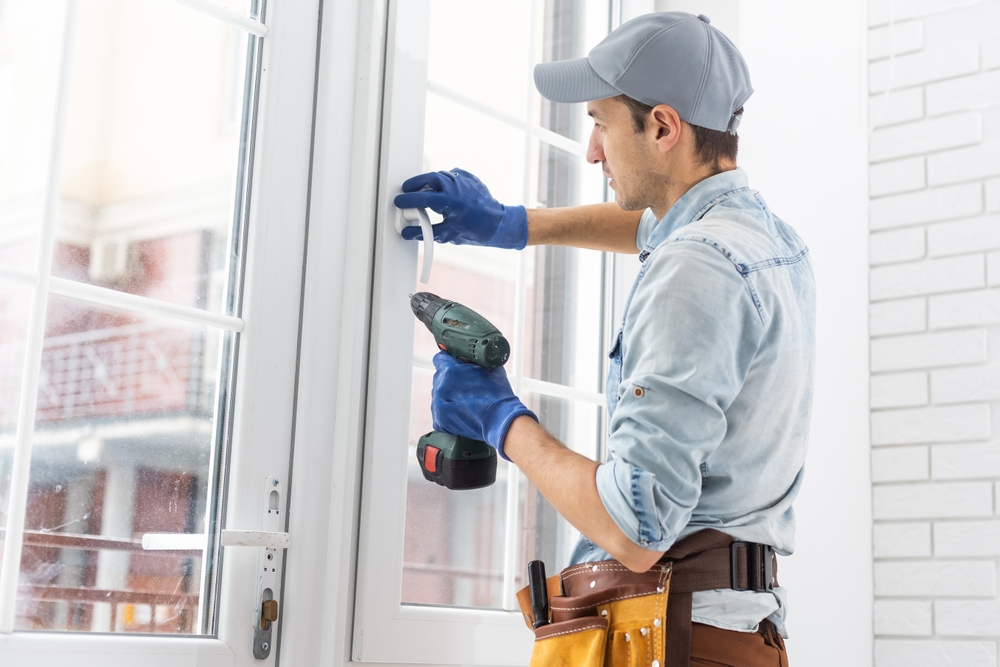
You go to open the back door, and it just sits there. Last summer it slid with one finger. A lot of homeowners are surprised to learn that this is one of the most common signs they need sliding glass door repair in Palm Desert, CA. Before assuming the entire door needs replacing, it is worth checking what is causing the drag. In many cases, the fix is far simpler than expected.
1. Dirt Hides Where You Would Never Think to Look
Look down at the bottom track. See that little groove the door rides in? It catches everything. Dust off the patio, bits of dead leaves, fine sand blown in on the wind, it all drops in and stays put. Give it a few months, and it packs down into a hard, gritty crust. The wheels under the door have to crawl over that mess every time you open it. First you feel a tiny catch. Then a real drag. Then it stops right where it pleases. Grab a vacuum and a stiff brush, and most of that gunk comes straight out. A light wipe of dry lube after keeps the channel slick. Leave it sitting, though, and the grit starts denting the metal, which turns a five-minute cleanup into a real repair.
2. Two Small Wheels Carry the Whole Door
Now think about what sits under the panel. Two little wheels hold up the entire door. And a glass slider is no featherweight. Plenty of them weigh more than a hundred pounds. Those two wheels take all of it, every single day, every single slide. Plastic ones go flat. Metal ones rust and seize up, and our muggy summer afternoons only hurry that along. Once a wheel quits rolling, it starts dragging, and the drag shoves the door sideways into the frame. You might catch a low grinding sound in the evening, after the metal has puffed up in the heat. Tightening the screws underneath buys you a little time. Swapping the wheels is the honest fix, and a good tech wraps that up in about an hour. It is one of those repairs you wish you had done sooner, the second you feel the door float again.
3. Sometimes the Glass Is the Real Problem
A sliding door can look fine one day and crack the next. A stray pebble, a hard slam, or a worn seal is often all it takes. Once moisture gets trapped between the panes, the view turns cloudy and insulation drops. That is usually when considering broken sliding door glass repair becomes necessary. Replacing damaged glass restores smooth operation, improves energy efficiency, and helps prevent a bigger mess later.
4. Your House Moves, and the Door Notices
Here is the one nobody warns you about. Houses move. The ground out here swells and shrinks with the seasons, the foundation settles a hair over the years, and the wood frame flexes as it dries out. A door frame that was dead square on day one can slowly go crooked. When the frame leans even a touch, it pinches the door at one corner, and that alone is enough to jam it. Look for a thin line of daylight where the door meets the side of the frame. The door might slide fine for a couple of feet, then stick like it hit a wall. A tech can shim and square the frame to put it right. It takes a steady hand, since pushing one corner too far just sends the trouble straight to the other side. This is the cause folks almost never guess, because the door looks fine and the glass is clean as can be.
5. Signs You Have Waited Around Too Long
A door rarely dies all at once. It drops hints first, and those hints are easy to brush off until you know what to watch and listen for. Keep an eye and an ear out for these:
- A grinding or popping sound when you push the door.
- Daylight or a cool draft sneaking through when it is shut.
- Cloudy, fogged-up glass stuck between the panes.
- A lock that no longer lines up with its slot.
- A door that takes both hands and a real shove to move.
door is on its way out. The longer you let it ride, the more parts get dragged into the problem, and the fatter the final bill gets. One short phone call today beats a full door swap down the road, hands down.
A sticky door is not the end of the world, and it is hardly ever just one thing gone wrong. Grit in the track, worn-out wheels, a cracked pane, a frame nudged by the seasons, usually a couple of these gang up before you even notice. The good part is that each one has a clear fix, and most get handled in a single visit without ripping out the whole door. Treat that first little catch as the warning it truly is, and the easy glide sticks around for years to come. Drag your feet, though, and a cheap tune-up balloons into a costly door replacement nobody asked for, all over a problem you could have caught.
“Tired of fighting a door that will not budge? Clear Winner gets it gliding like the first day. Call now at 760-338-0364, and we will handle the rest.”
FAQs
Q1: How often should I have my sliding doors looked at in Palm Desert, CA?
The desert has a way of sneaking dust and grit into everything. In Palm Desert, CA, a quick track cleaning and roller check twice a year is enough for most doors. If yours gets heavy daily use, having it checked a little more often can prevent bigger headaches later.
Q2: Why does my patio door stick more during the summer in Palm Desert, CA?
Heat changes things. As temperatures climb, door frames and rollers can expand just enough to create extra friction. That’s why many homeowners in Palm Desert, CA, notice their patio doors dragging more during the hottest weeks of summer.
Q3: Should I fix or replace a cracked patio door in Palm Desert, CA?
It depends on the damage. A single cracked pane can often be replaced without changing the entire door. For many homes in Palm Desert, CA, replacing damaged glass restores the look, improves insulation, and costs less than a full replacement.